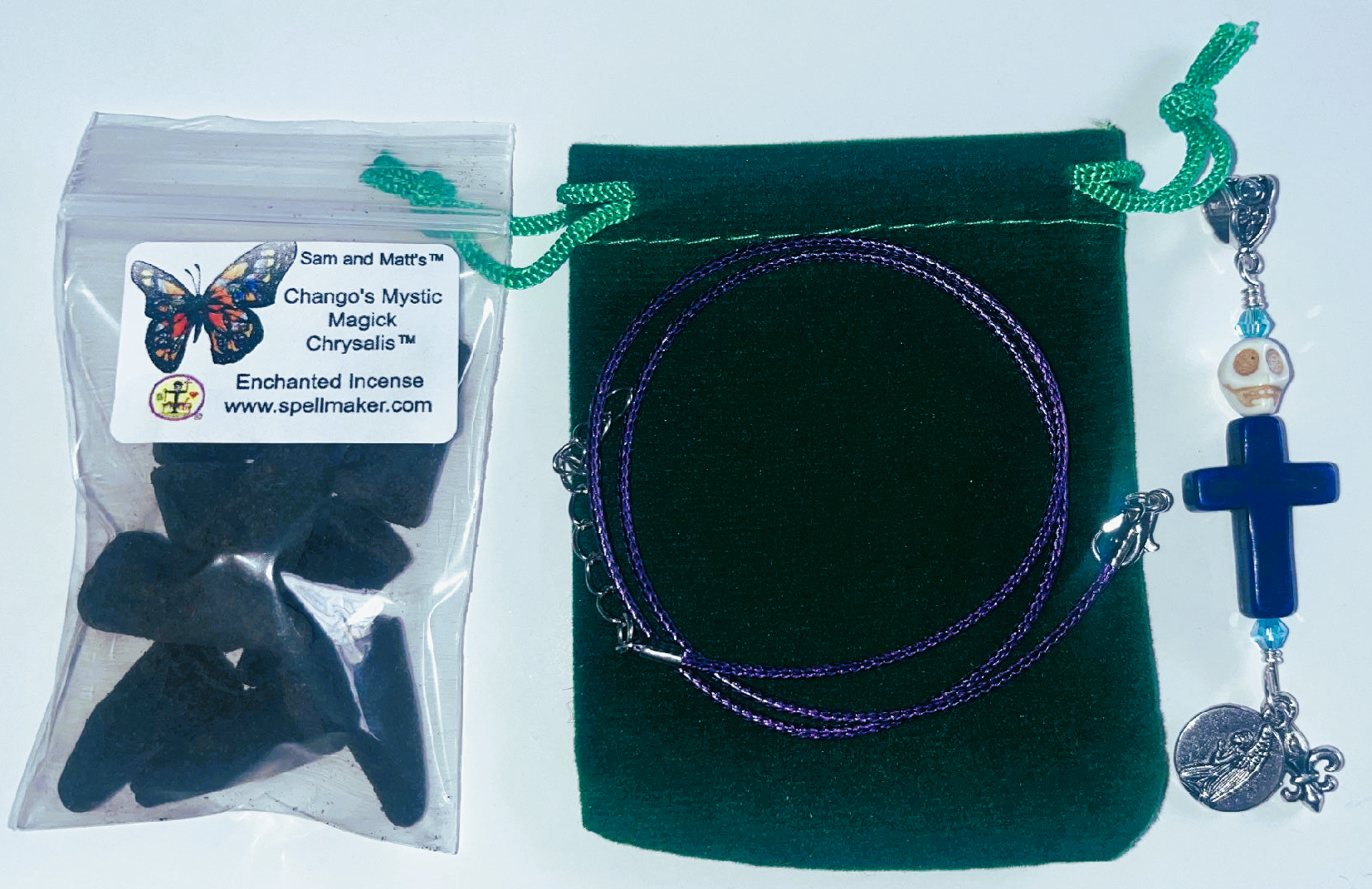
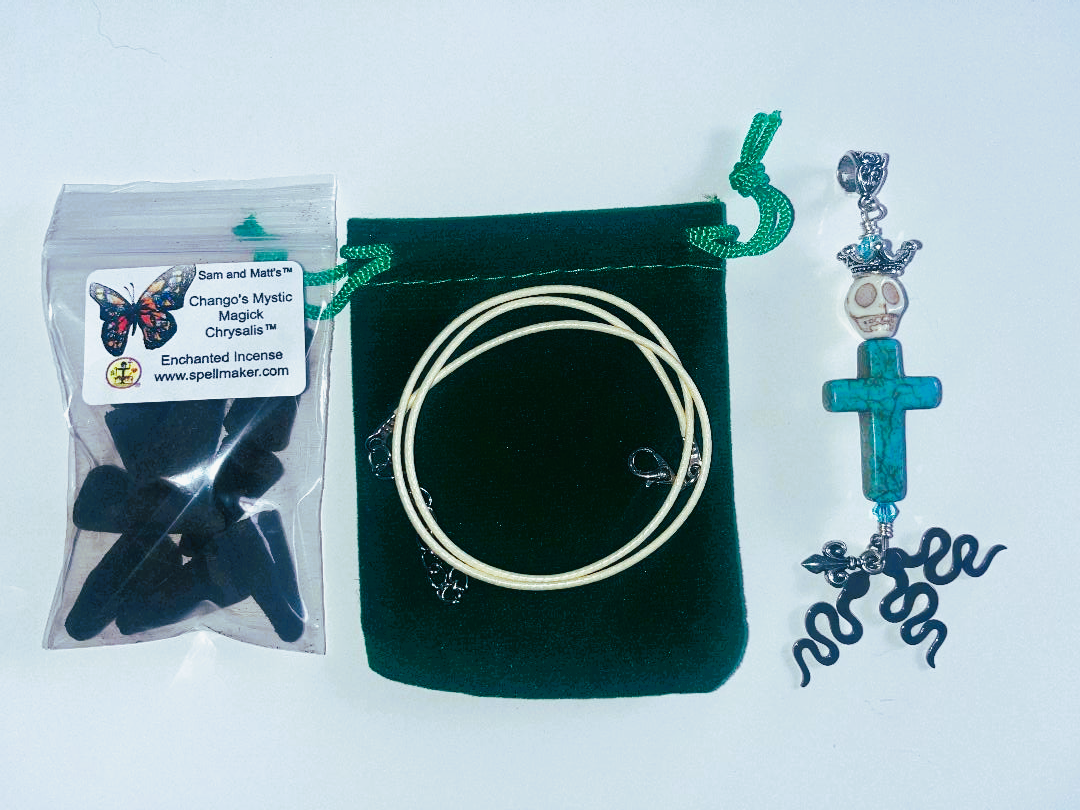
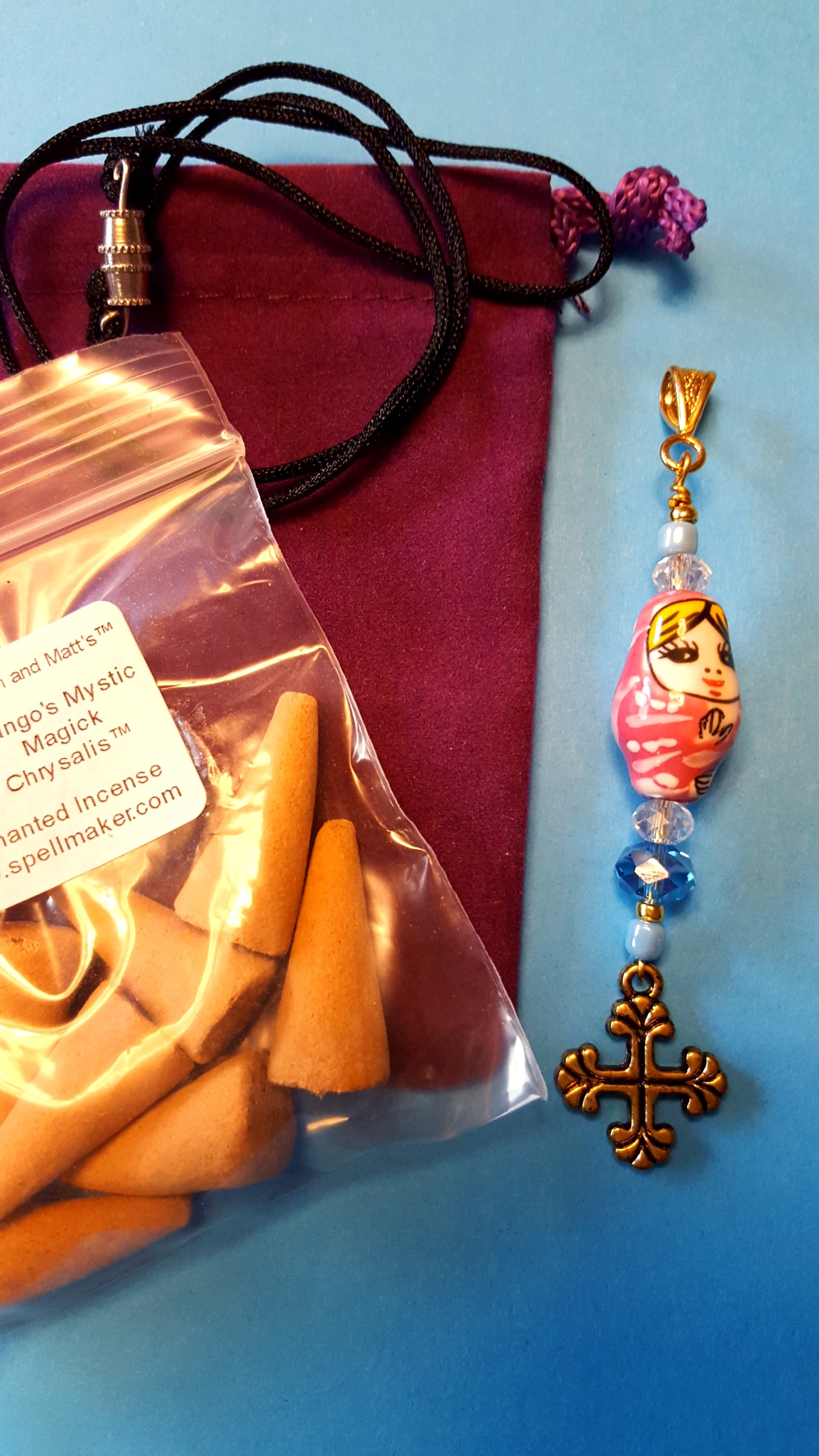
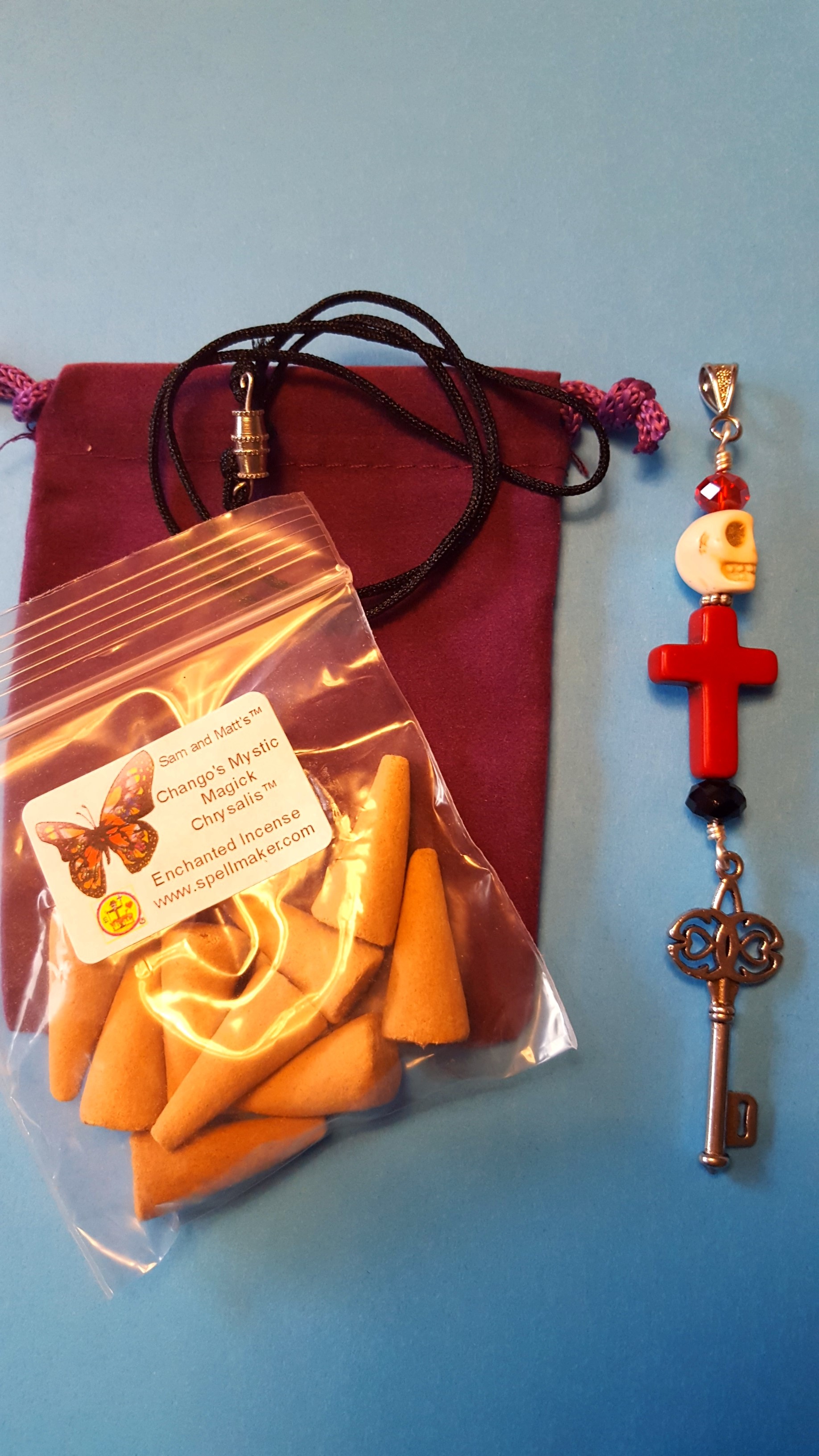
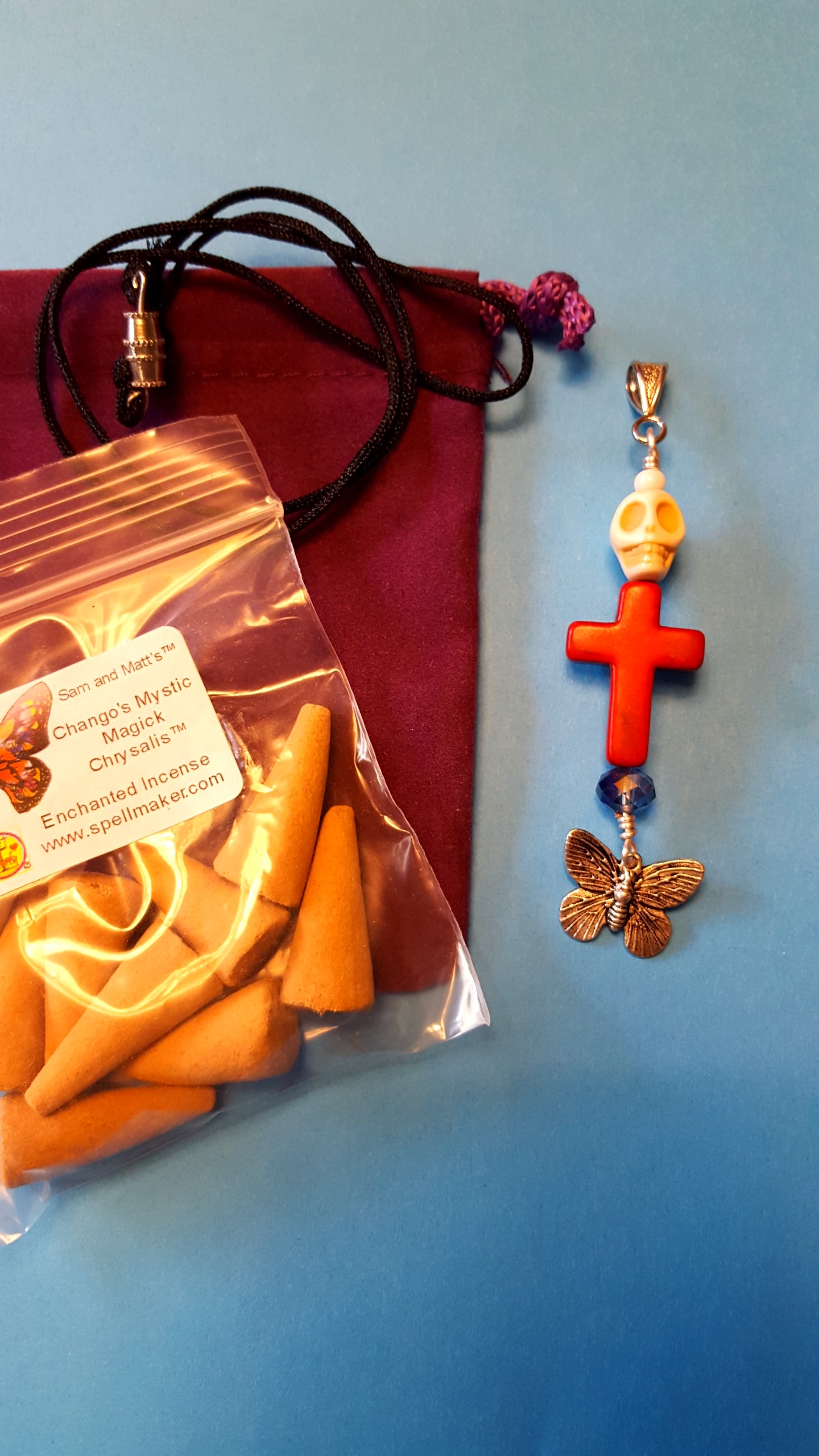
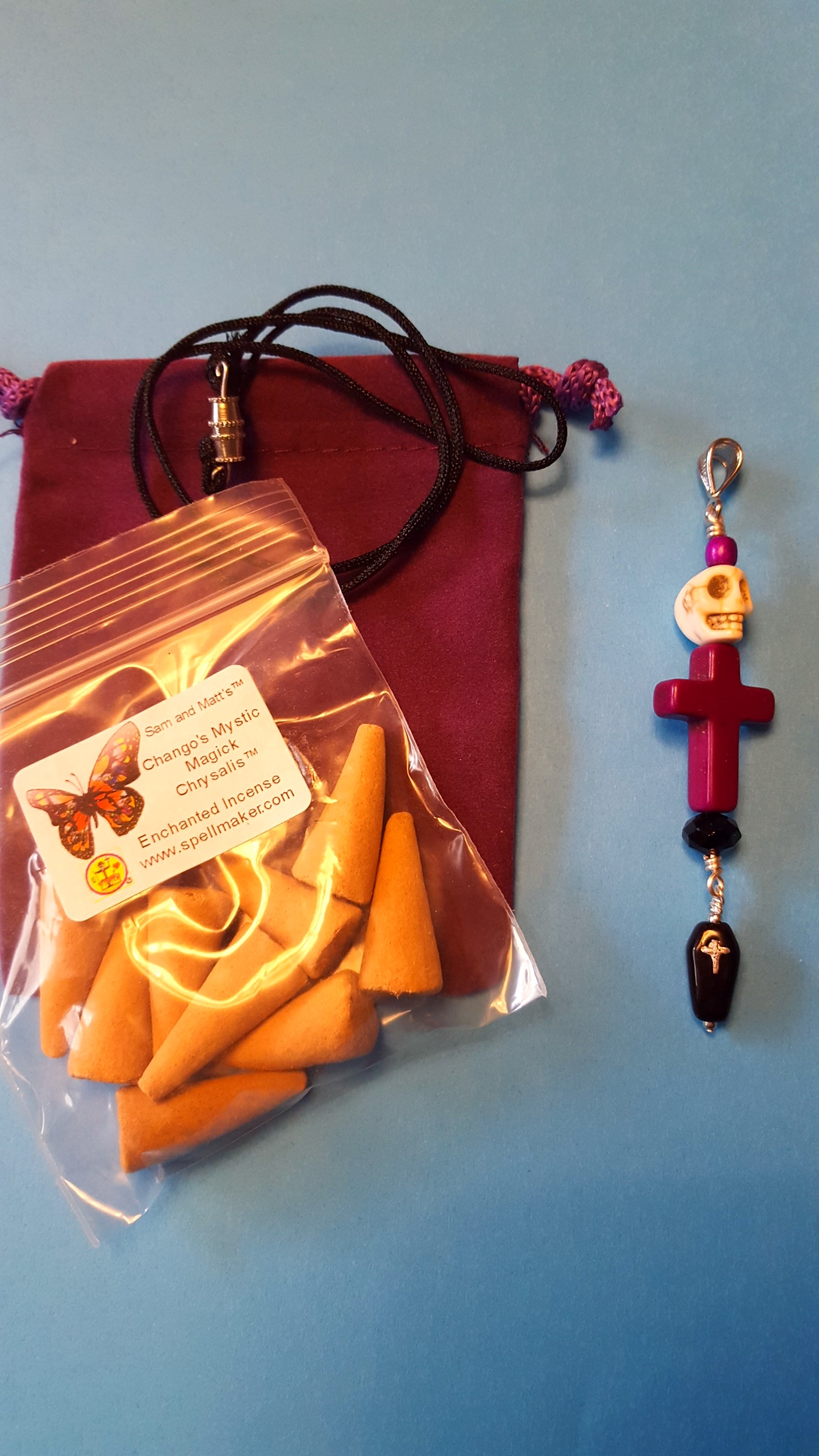
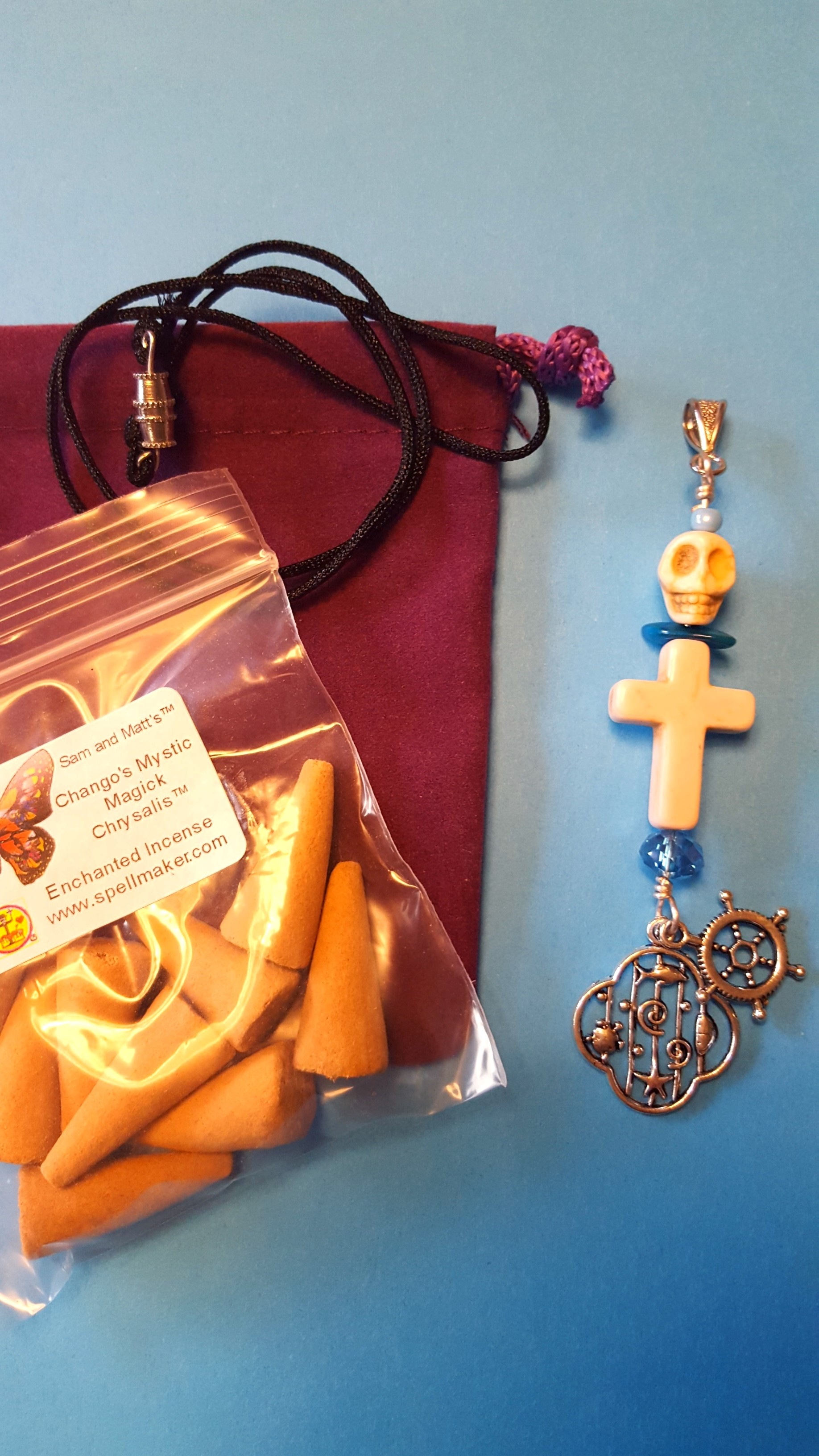
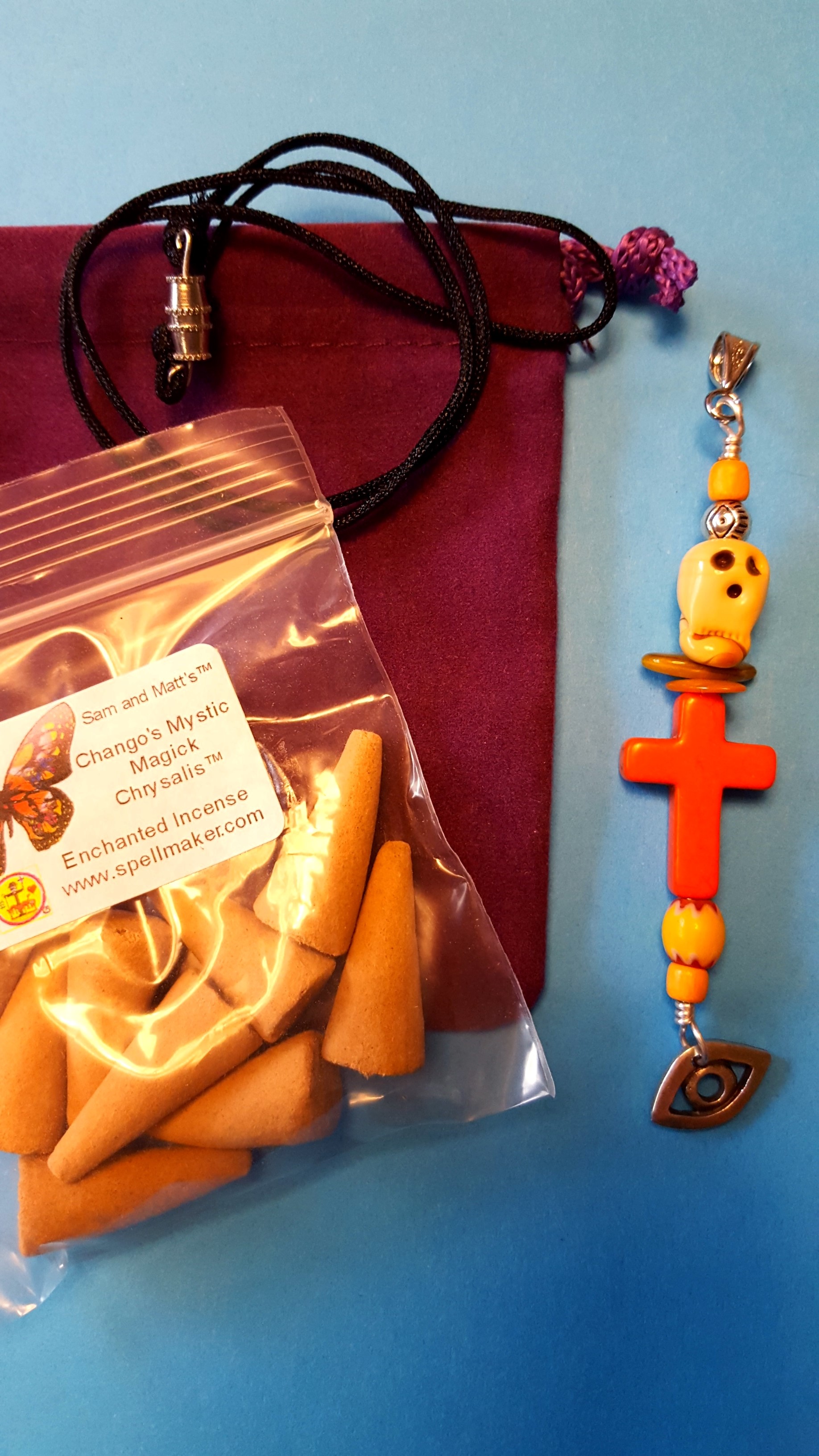
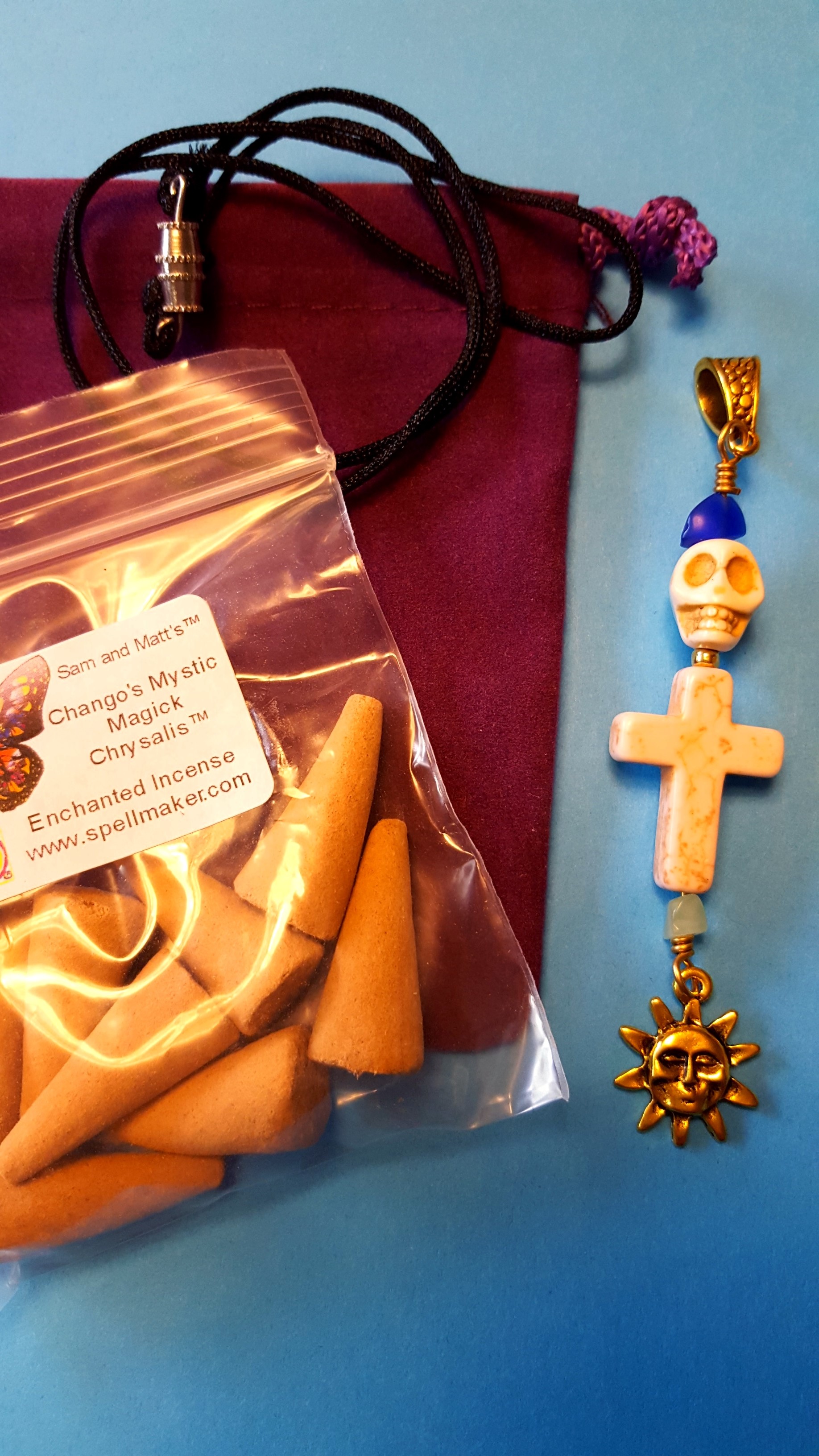
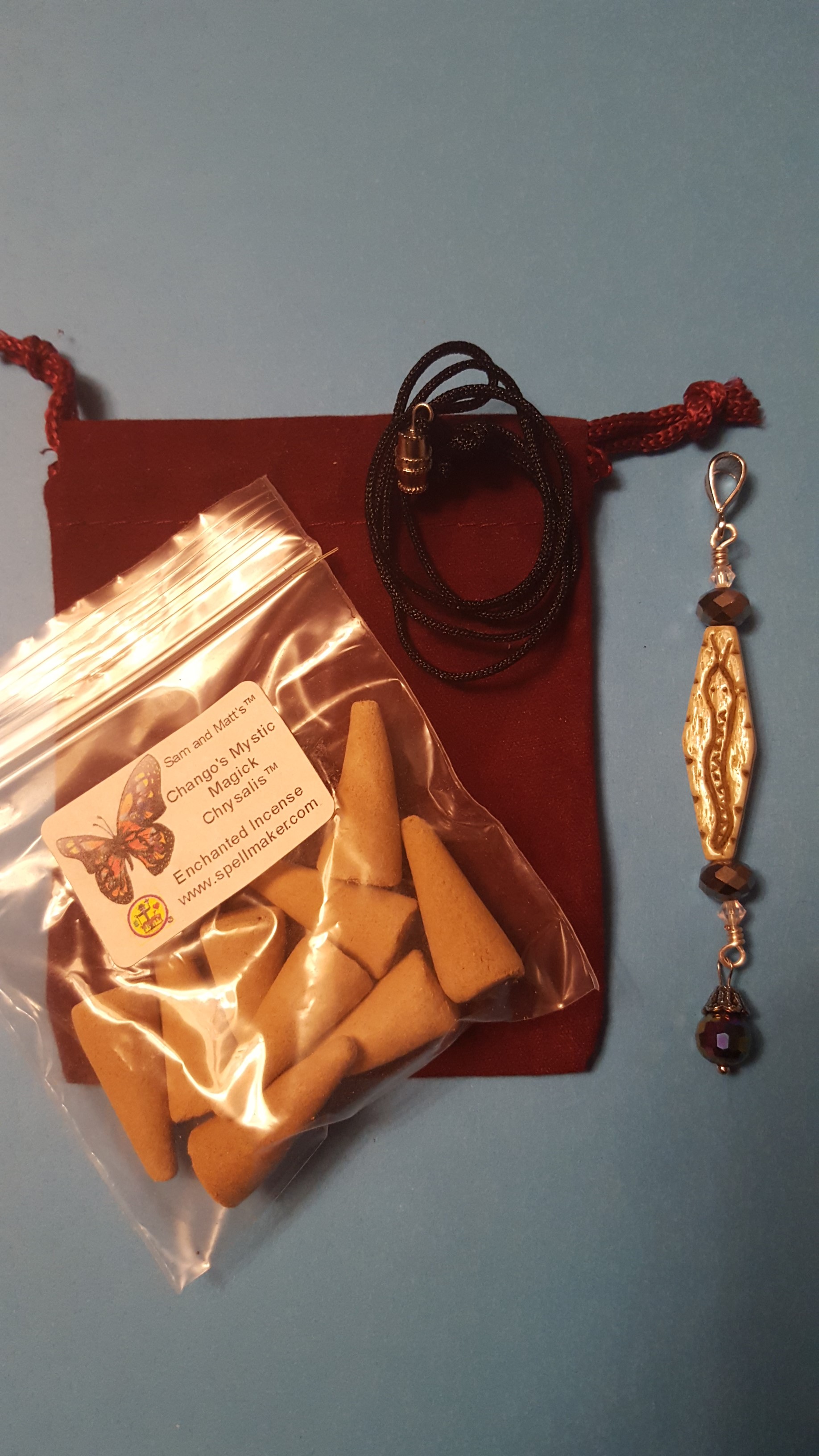
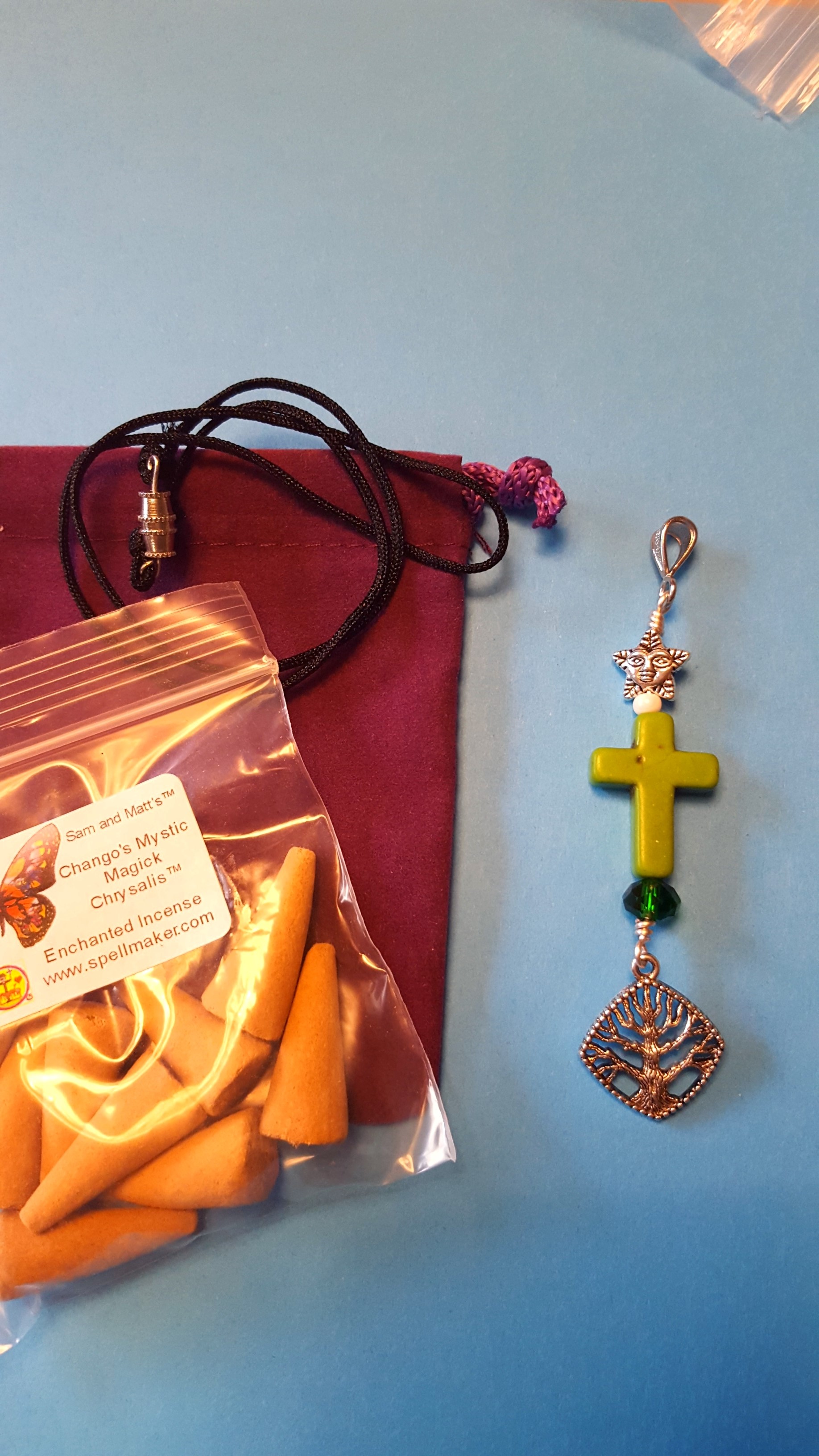
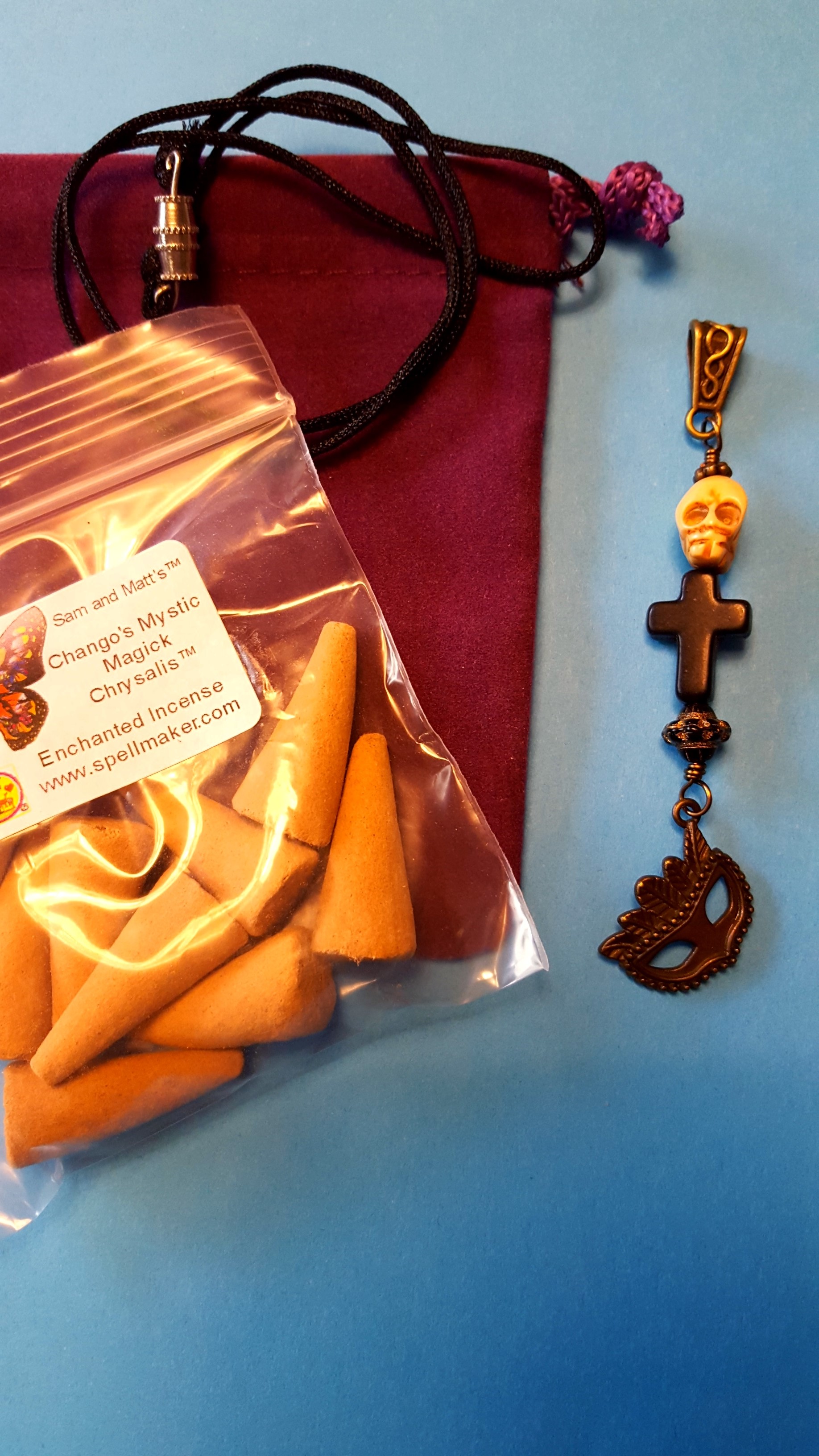
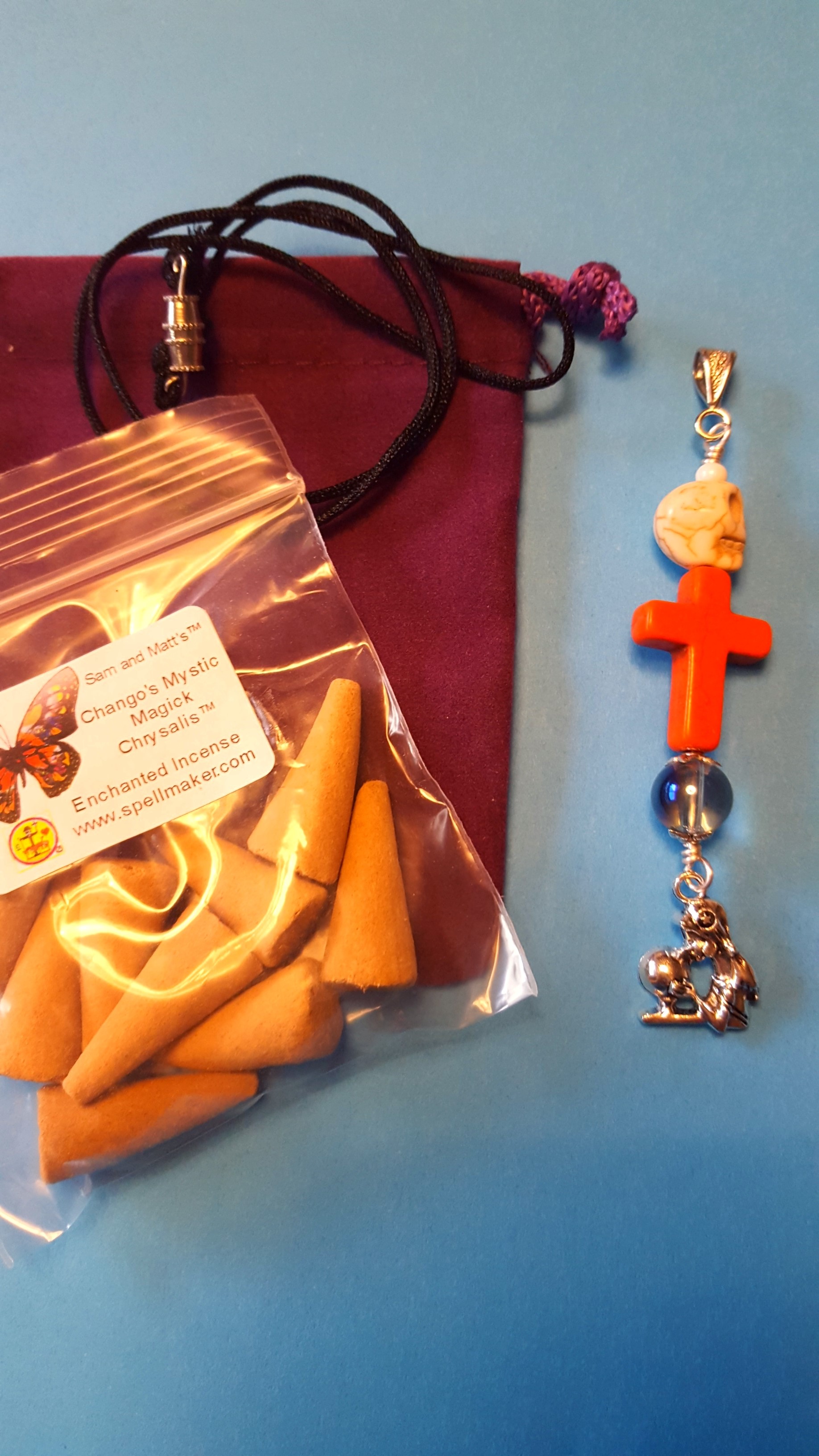
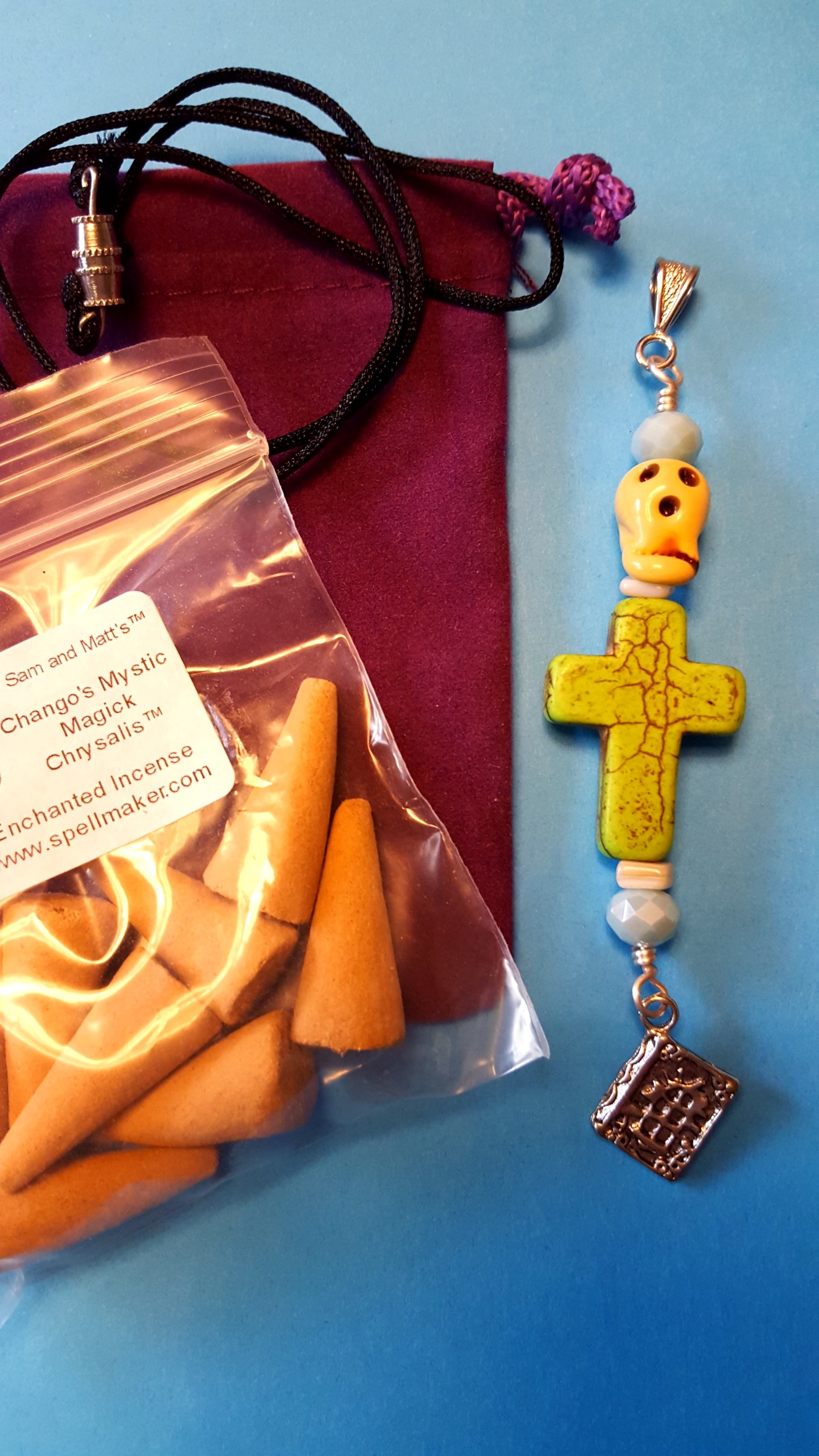
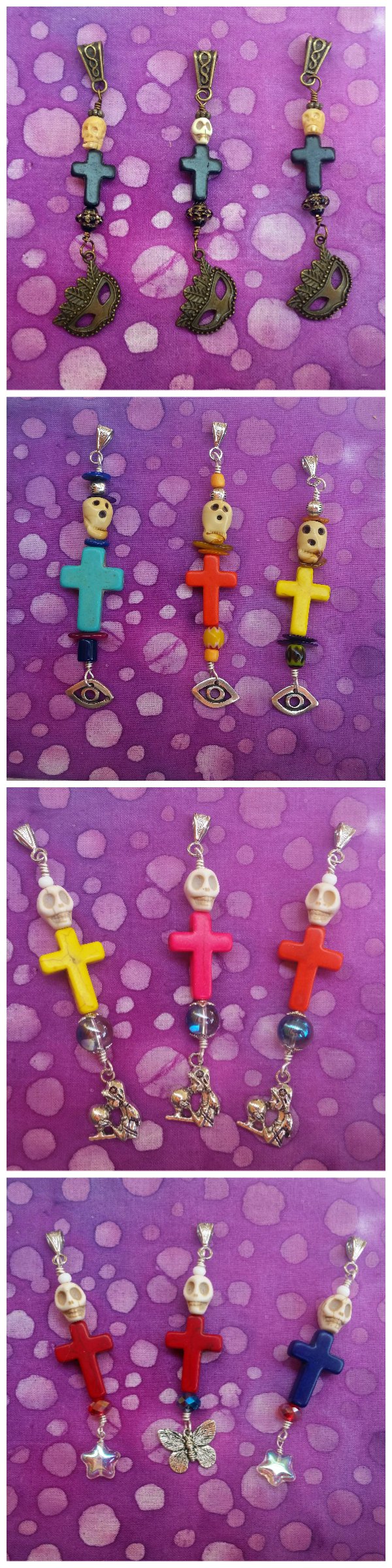
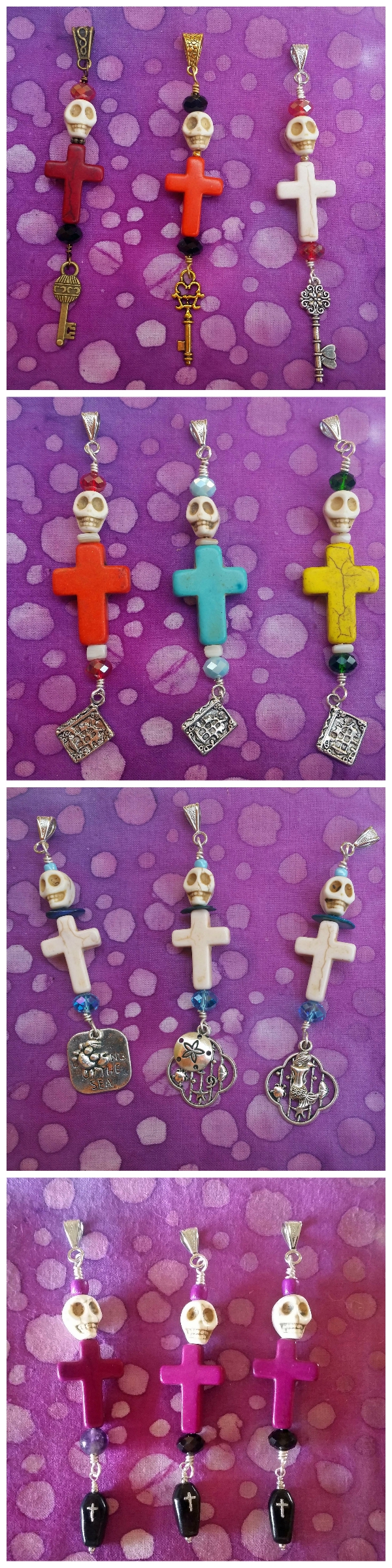
We love our New Orleans Voodoo Charms and hope you do, too! Our triple-consecrated Vodou Spirit charms are made by hand, in-house, by Voodoo Priestess Sister Bridget Corfield. Each charm is designed and handcrafted personally by Sister Bridget using a variety of quality materials including stones, glass beads, bone beads, crystals, Czech glass, and more.
She consecrates each charm to its particular purpose and lwa (Vodou spirit). Mambo Sam and Parran Matt then consecrate the charm as well before sending it out to you. Because each charm is individually made, it may vary slightly from the photograph.
Love, luck, protection, spirit work, guidance, learning, prosperity, uncovering secrets and more.
Guardian Angel Charm
$21.95
The Guardian Angel Charm is a beautifully handmade and consecrated talisman designed to help you make a spiritual connection with your guardian angel. Use it as a sacred focus for communication, comfort, clarity, guidance, protection, and support from your celestial protector.
Each charm is crafted with care and infused with blessings. Carry it with you, hold it during meditation or prayer, or keep it nearby during important life events and difficult decisions when you would like an added sense of spiritual support.
Simbi Three Kings Charm
$21.95
Honor Simbi Makaya, Simbi Andezo, and Simbi D'lo with this handcrafted and consecrated Voodoo charm. It is designed as a spiritual focus for guidance, protection, mystical development, healing, purification, and a deeper connection with the Simbi Three Kings.
This beautiful charm has been dedicated to Vodou Love Goddess Erzulie Freda to help manifest, strengthen, and provide love of all kinds to all situations. Calling on Erzulie Freda for all of your love needs is a time-honored New Orleans Voodoo and Haitian Vodou tradition. She tries to not only bring love into your life, but the right love for you. Sick of choosing all the wrong partners? Ask Erzulie Freda to help you choose the right person for you!
Papa Alegba's Lucky Charm
$21.95
Papa Legba - the man at the crossroads! Undoubtedly one of the most beloved Voodoo Spirits, we call on him for opening doors, clearing paths, helping with communication, bringing general luck and inspiration. If you never had another charm, this would be the one that is a "must have." If you feel like you are stopped every time you try to accomplish something, ask Papa Legba to open that locked gate for you!
Ogoun Feraille's Physical Protection and Strength Charm
$21.95
The ultimate in physical protection and strength. Ogoun is known for his fierce protection and offering himself as your guardian from harm. A strong warrior lwa, he is strategic, strong, and charismatic. Despite his warrior personality, he is also a perfect gentleman. He might act strongly, but he is never unkind unless someone is trying to harm you.
Baron Samedi Charm
$21.95
This charm represents the power of Baron Samedi and Maman Brigitte in this world and the next. Perfect for protection, spiritual enlightenment, honoring the Baron and Brigitte, connecting with your ancestors, matters of life and death, birth and rebirth, etc. Always remember that Baron Samedi is very much about life as much as death, because neither exists without the other! He and Maman Brigitte are also great healers.
LaSirene and Agwe Spiritual Protection Charm
$21.95
The lord and lady of the sea protect you from evil intentions, bad thoughts, negative magick, psychic attacks, black magick, spiritual attacks, negative spiritual beings and entities. This will also protect you from those "psychic vampire" people who seem to just suck the life right out of you! Remember, sometimes people don't even know they are doing this. But still, you want to protect yourself spiritually.
9 Mysteries Evil Eye Protection Charm
$21.95
The power of our House's 9 Mystery Lwa protect you against the evil eye. Evil eye protection is somewhat different than spiritual protection. The "evil eye" is when someone is wishing you harm by looking at you malevolently, being falsely nice to you, giving you dirty looks. If someone is "mad dogging" you, that is the start of the evil eye. Don't underestimate the power of someone's negative intentions towards you. It can wear on you and wreak havoc. If you think you are being victimized in this way, please protect yourself!
Sobo's Money Charm
$21.95
As the famous Vodou song goes, "Sobo, my lwa, I am assured!" The lwa Sobo imbues this charm with his abilities to help us find, make, and bring more money into our lives. He is all about the philosophy of "if I believe it, it is true." Power of positive thinking manifestation.
Damballah's Conjuration of Powers Charm
$21.95
Call upon the creationistic power of Damballah's abilities to enhance and strengthen magick - to help you call upon the power of your spirit and the Vodou spirits, to make the most powerful magick possible from within you.
Gran Bwa Root Work Charm
$21.95
Dedicated to the powerful Gran Bwa, use this charm if you are working with herbal magick, root work, growing, planting, trees, fae magick, etc. Also, used for connecting with one's roots (ancestors).
9 Mysteries Invisibility Charm
$21.95
Use the power of our House's 9 Mystery Lwa to achieve the essence of invisibility. No, it doesn't actually render you invisible. BUT, when used it does make you much less noticeable. Don't want to be bothered? Don't want to stand out from the crowd? Just want to observe? This charm is for that. It is also said to make your magickal work invisible to others who might detect and negate it.
9 Mysteries Discover Hidden Secrets Charm
$21.95
Use the power of our House's 9 Mystery Lwa to uncover secrets, lies, untruths, etc. Also, for finding out information that is being withheld from you, researching difficult subjects, etc. Learn the truth! Quote Mambo Sam, "I can't believe everyone doesn't have one of these!"
9 Mysteries Learning and Study Charm
$21.95
Use the power of our House's 9 Mystery Lwa to help you study and learn. Great for those difficult subjects, difficulty learning. Helps with study and retention of any subject.
What’s New? What’s Free?
Join the Spellmaker Newsletter
We do a lot of free things throughout the year here at Spellmaker. We offer free classes, teaching circles, rituals, special events, giveaways, contests, and other fun things throughout the year. The best way to make sure you hear about them is to subscribe to the Spellmaker newsletter.
We never sell or share your information, and we never spam you. We also use the newsletter to announce special sales, new products, and other Spellmaker updates.
Patreon is where I can share more of the teachings, spiritual discussions, House happenings, behind-the-scenes thoughts, and personal spiritual reflections that do not always fit neatly onto the main Spellmaker website.
It is also a good place for the more conversational side of what I do: little updates, deeper thoughts, extra bits of guidance, and the occasional thing I simply want to share with the people who enjoy keeping up with the work.
If you would like a little more time with me and a little more of the world behind Spellmaker, I would love to have you there.
Personal ConnectionChoose a charm or amulet that resonates with you personally. It could be a symbol, material, or object that you feel drawn to or that holds special meaning for you.
Intention SettingBefore using your charm or amulet, set a clear intention for what you want it to achieve. This could be protection, attracting love, or bringing good fortune. Focus on this intention while holding the charm.
Cleansing and ChargingRegularly cleanse your charm or amulet to remove any negative energies it may have absorbed. Methods include:
Smudging with sage or incense
Placing it in moonlight overnight
Submerging it in salt water, if the material allows
After cleansing, charge your charm by holding it and focusing on your intention, or by placing it in sunlight or moonlight to absorb positive energy.
Consistent WearWear your charm or amulet consistently to maintain its connection to your energy and intention. This could be as a necklace, bracelet, or even in your pocket.
PlacementIf you don't want to wear your charm, place it in a significant location, such as under your pillow, in your car, or in your home where you spend a lot of time.
Ritual UseIncorporate your charm or amulet into rituals and meditation practices. This can deepen your connection to the object and reinforce its intended purpose.
Respect and CareTreat your charm or amulet with respect and care. Store it properly when not in use, keep it clean, and handle it with reverence.
Charms and Amulets Throughout History
Charms, amulets, and talismans may be one of the oldest forms of magickal items used by human beings! There is a rich history of amazing findings of charms, amulets, and talismans in grave sites and other historical locations. Many of these discoveries go back thousands of years!
In ancient Egypt, charms were often made in the form of amulets, which were believed to hold protective powers. These amulets were commonly placed on mummies to ensure safe passage to the afterlife. The ankh, a symbol of life, and the scarab beetle, representing rebirth, are examples of such amulets.
The Greeks and Romans also used charms extensively. The Greeks often wore talismans inscribed with magical symbols or words to protect against evil spirits and illnesses. Romans used phallic charms called fascinum to ward off the evil eye and bring good fortune.
Medieval Europe
During the medieval period, the use of charms and talismans became widespread in Europe. These items were often imbued with Christian symbolism and prayers. For instance, knights would carry crosses or relics into battle for protection. The belief in the power of these objects was deeply rooted in the medieval mindset, intertwining faith with folklore.
Medieval grimoires, or books of magic, often contained instructions for creating charms. These texts, such as the "Key of Solomon," outlined rituals and materials needed to imbue objects with magical properties.
Indigenous Cultures
Indigenous cultures around the world have their own rich traditions involving charms. Native American tribes used objects like feathers, bones, and stones as charms to connect with spiritual forces and provide protection. Similarly, in African traditional religions, charms and amulets known as gris-gris are used for protection and to bring luck.
Modern Times
In contemporary society, the use of magickal charms continues, often blending ancient practices with new age beliefs. People might carry crystals, wear symbolic jewelry, or create personalized charms to attract love, prosperity, or protection. The rise of interest in the occult and alternative spirituality has kept the tradition of magickal charms alive, adapting to modern contexts while retaining their historical roots.
Today, charms are not only personal talismans but also popular fashion accessories, blending the mystical with the mainstream. They serve as a reminder of humanity’s enduring fascination with the mystical and the desire to harness unseen forces for personal benefit.